A City Made of Light
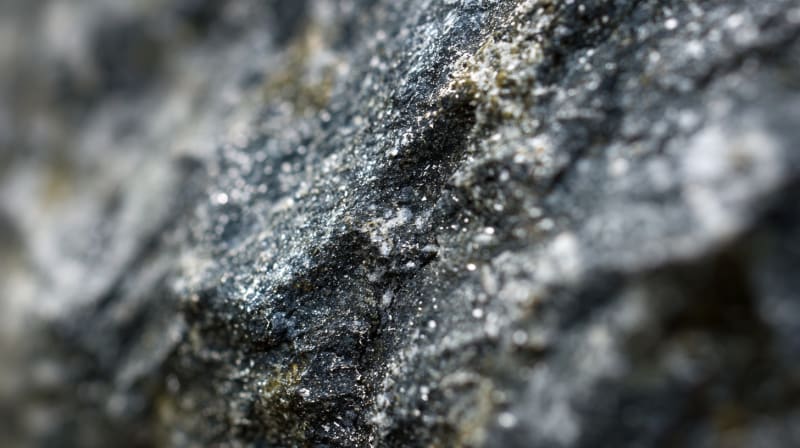
On an overcast day, Aberdeen looks silver. The mica crystals embedded in its granite catch whatever light is available and throw it back — a subtle, shifting sparkle that gives the city its other name: the Silver City. On a rare clear day, the buildings seem to glow.
This is not decorative finish. It is not applied. It is geology made visible in architecture, and it makes Aberdeen unlike any other city in Britain.
The Stone That Built the City
Aberdeen's granite is an intrusive igneous rock — formed by the slow cooling of magma deep within the Earth's crust. That slow cooling produced an interlocking crystal structure of quartz, feldspar, and mica that gives granite its exceptional hardness, load-bearing capacity, and weather resistance. It also gave the stone its distinctive lustre: the muscovite mica content catches light at different angles, creating the silver shimmer that defines Aberdeen's streetscape.
During the mid-eighteenth to mid-twentieth centuries, almost everything built in Aberdeen used locally quarried grey granite. At the peak of the industry, the principal quarries were Rubislaw, Kemnay, Dyce, Dancing Cairns, and Persley — all within a short distance of the city. Red granite came from Peterhead to the north, with a darker shade from Hill o' Fare on Deeside and salmon pink from Corrennie on Donside.
There were once around 150 granite quarries in the Aberdeen area alone. The stone was everywhere. It was the default. It was what Aberdeen was made of.
Rubislaw: The Hole in the Ground
The story of Aberdeen granite has a focal point, and it is a hole.
Rubislaw Quarry opened in 1740 or 1741. Over the next two hundred and thirty years, it grew into one of the largest man-made holes in Europe — approximately 142 metres deep and 120 metres in diameter. An estimated six million tonnes of granite were extracted.
The stone that came out of Rubislaw built most of Victorian Aberdeen. But it did not stay in Aberdeen. Rubislaw granite was used for the terraces of the Houses of Parliament in London. For Waterloo Bridge. For the Bell Rock Lighthouse. It was exported to the Paris Opera House and the State Capitol Building in Austin, Texas.
Peterhead granite went even further. The deep red stone from the quarries north of Aberdeen was used for St John's College Chapel pillars in Cambridge, and St George's Hall pillars in Liverpool. The darker Peterhead Blue granite found its way to the Trafalgar Square fountain bases and Prince Albert's Mausoleum.
For a period, northeast Scotland was exporting its geology to the capitals of the world.
The Quiet Decline
By the 1960s, the Aberdeen granite industry had declined as glass, steel, and concrete became the materials of modern construction. Rubislaw Quarry was the last in Aberdeen to close, in 1971. The quarry filled with water. The industry moved on.
Today, very few granite quarries remain active anywhere in Scotland. Those that do — Kemnay, Corrennie — mainly produce crushed aggregate, with dimensional building stone available only occasionally and typically for prestige public projects such as the Scottish Parliament building.
Most granite used in Scotland is now imported. The Scottish stone industry currently produces roughly one-tenth of the stone used in Scotland annually. Over five million tonnes of building stone are imported into the UK each year, and the cost has almost doubled since 2015.
Related reading: The Decline and Revival of Scottish Stone: Why It Matters for Building Today
What Makes Aberdeen Different
Walk through Aberdeen and the granite is everywhere — not just in the grand civic buildings, but in the tenements, the garden walls, the kerb stones, the harbour infrastructure. The stone is democratic. It was not reserved for the wealthy; it was what you built with because it was what lay beneath you.
That is what gives Aberdeen its distinctive character. Edinburgh has its sandstone layers — golden New Town, grey Old Town. Glasgow has blonde Carboniferous sandstone. Dumfries has its red Permian sandstone. But Aberdeen has granite, and granite behaves differently from sandstone in every way that matters to a city.
It is harder. It lasts longer. It resists pollution and weathering in ways that softer stones cannot. Aberdeen's Victorian buildings look much as they did when they were built — not because they have been restored, but because the material resists time. The natural patina that develops on granite is subtle, a deepening rather than a deterioration.
And it catches the light. That mica content — the sparkle that earned the city its Silver City name — is unique to granite. No other Scottish city has that quality. In low winter sun or the long summer gloaming, Aberdeen's buildings are alive with reflected light in a way that sandstone, for all its warmth, does not achieve.
Related reading: Scotland's Building Stone: A Complete Guide to Types, History & Where to See Them
The Granite City Today
Aberdeen's relationship with granite is no longer one of production. The quarries are closed. The industry that shaped the city for two centuries is history. But the material remains — in every street, every terrace, every harbour wall — and it continues to define what Aberdeen feels like.
There is a lesson in that for anyone choosing materials for a building project. Granite was not chosen by Aberdeen's builders for its beauty, though it is beautiful. It was chosen because it was there, because it was tough, and because it lasted. Two hundred years later, those remain good reasons to choose stone.