Beyond the Worktop
Stone in kitchens used to mean one thing: the countertop. Granite, then quartz, then engineered composites — all competing for the same horizontal surface. But the most interesting stone in kitchens right now is not lying flat. It is climbing walls, wrapping islands, and turning extractor housings into sculptural features.
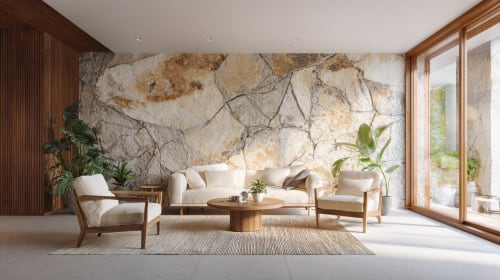
Stone has become an architectural material in the kitchen, not just a worksurface. And that shift changes what cladding can do in the room where most households spend the most time.
Why Stone Is Moving Upward
The direction is clear in the industry data. Stone is expanding beyond its traditional countertop role into architectural applications — stone-clad cooker hoods, stone feature walls, and full-height backsplashes are all gaining momentum. Full-slab backsplashes, where the counter material continues up the wall as an unbroken surface, are an accelerating trend driven by the seamless look and easier maintenance compared to tiled alternatives.
At the same time, the broader design philosophy is shifting toward timeless, flexible kitchens that age well rather than kitchens styled around a trend. Floor-to-ceiling cabinetry, panel-ready appliances, and cohesive material palettes point toward kitchens that feel calm, uncluttered, and considered. Stone fits this direction naturally — it does not date the way a paint colour or a tile pattern does.
And the finish is changing. Matte and honed surfaces are extending across every element of the kitchen — sinks, taps, lighting, hardware — reinforcing a warmer, less clinical aesthetic. Textured, honed stone surfaces feel at home in this environment in a way that polished granite never quite managed.
What We Love: Five Stone Kitchen Features
The Stone-Clad Cooker Hood
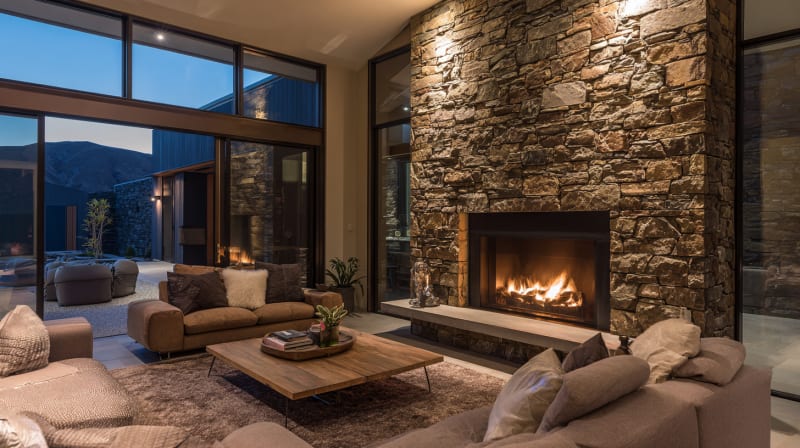
A rangehood housing wrapped in textured stone — split-face sandstone or a warm, earthy cladding that turns an appliance into the room's focal point. In a converted steading kitchen in Angus or a farmhouse renovation in Perthshire, the stone creates a natural chimney breast effect, grounding the cooking zone and giving the kitchen a sense of weight and permanence that connects it to the building's heritage.
Why it works: The cooker hood is already the visual anchor of most kitchens. Cladding it in stone elevates it from functional appliance housing to architectural statement. The texture draws the eye upward, adding height and drama without competing with the worksurface.
The Full-Height Backsplash
Stone cladding running from countertop to ceiling behind the cooking or preparation zone. No grout lines, no tile edges, no change of material. One continuous surface of natural stone.
Why it works: Masowa Stone's cladding products are heat resistant and stain resistant, with no grout lines to trap grease or discolour. The practical benefits are real: easier cleaning, no re-grouting, and a surface that looks the same in year five as it did on day one. The visual benefit is seamless continuity — the kitchen wall becomes a single plane of natural texture.
The Island Face
Rather than the standard painted MDF panel on the dining side of a kitchen island, a face of stone cladding. Warm-toned, textured, catching the light from a pendant above. The stone creates a material conversation between the island and the rest of the room — particularly effective when combined with a timber or stone countertop above.
Why it works: The island face is the surface most visible to guests. It is what you see from the dining table, the sofa, the doorway. Cladding it in stone gives the island substance and presence — the difference between furniture and architecture.
The Niche or Alcove in Stone
A recessed shelf or display alcove lined with stone, perhaps flanking the cooktop or set into an island. Smaller in scale than a full feature wall, but precisely placed to create a moment of material richness where it counts.
Why it works: Restraint. Not every kitchen wants or needs a full stone wall. A well-placed niche offers warmth and texture at human scale — where your hand reaches for the olive oil or your eye settles while waiting for the kettle. It is stone used with intention rather than coverage.
The Breakfast Bar Surround
Stone wrapping the underside and sides of an extended breakfast bar or seating area. The same material palette as the kitchen proper, but experienced from a different angle — the texture is at shoulder and elbow height, close enough to touch.
Why it works: It bridges the kitchen and the living space. Where cabinetry stops and social space begins, stone provides continuity and tactile warmth. Masowa's cladding is compatible with underfloor heating, so the thermal comfort extends through the room without material compromises.
What to Think About for Your Project
Stone in kitchens works best when it responds to how the room is actually used. Behind the hob, you need a surface that handles heat and cleaning — stone cladding rated for kitchen applications meets that requirement without the maintenance burden of natural quarried stone or the grout maintenance of tile.
The weight advantage of cladding systems is worth understanding here. At a fraction of the weight of traditional stone, cladding goes onto standard kitchen walls and island structures without engineering reinforcement. That opens up applications — wrapping an island, lining a niche, cladding a hood — that would be impractical with quarried stone.
The current design direction helps too. Transitional design, where modern and traditional elements blend seamlessly, is the most popular aesthetic — 72% of industry professionals say it will continue to dominate kitchens. Stone cladding sits squarely in that space: a natural, timeless material applied with modern construction methods.
Related reading: We Love: Textured Stone Bathrooms
Related reading: Stone Cladding vs Render Scotland: Which Is Right for Your Project?